ESG recognition for supply chain transparency awarded to LONGi at the 2026 China ESG Gala
Date
April 15, 2026
read time
3
Minutes
Subscribe to the LONGi Newsletter

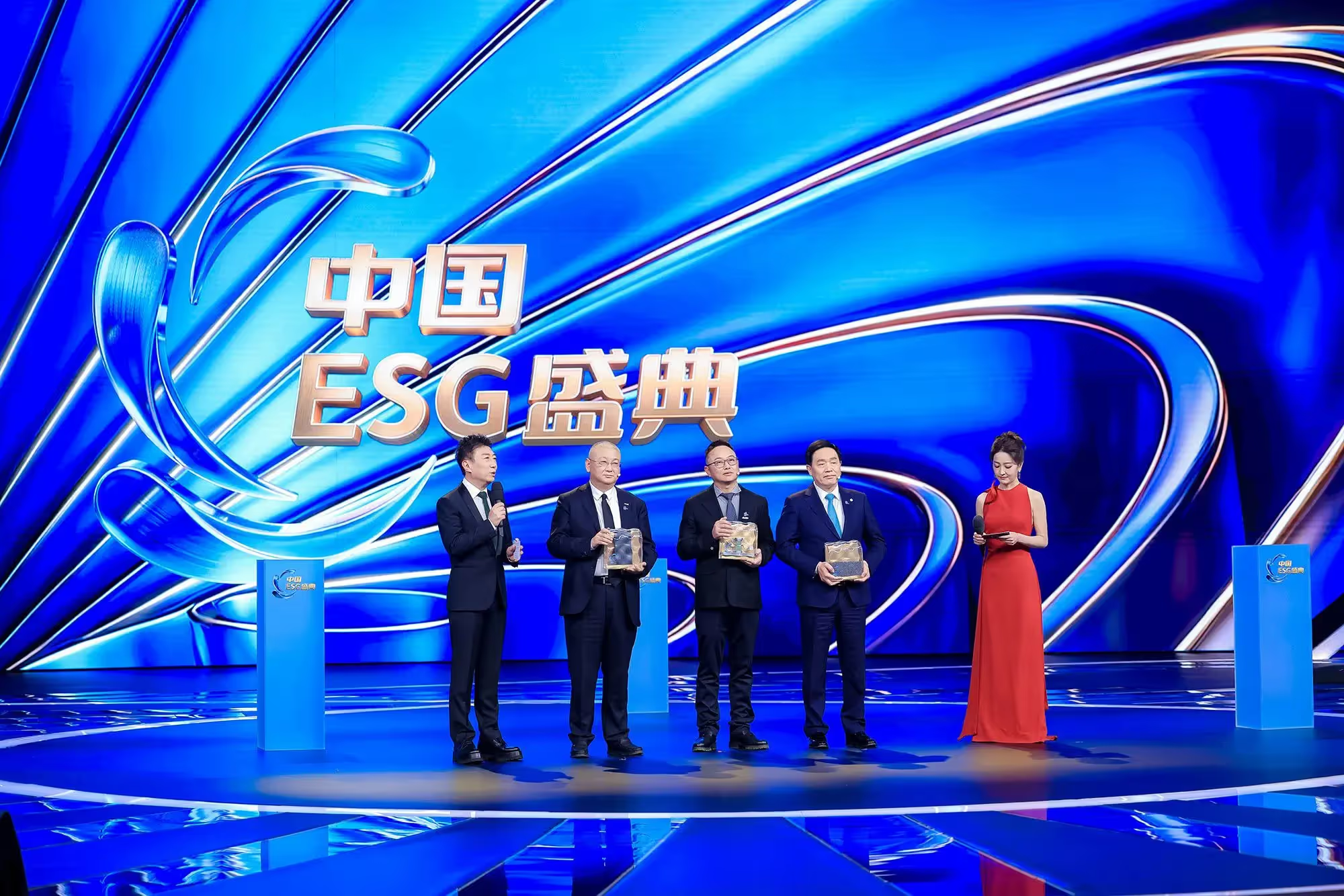
LONGi has been recognized as a model enterprise for sustainability and received the Breakthrough Enterprise of the Year award at the 2026 China ESG Gala on April 11. This recognition follows the recent achievement of an S&P Global Corporate Sustainability Assessment score of 72, placing the company in the top 4 percent of the global semiconductor and semiconductor equipment industry. During the event, Chief Technology Officer Li Zhenguo detailed how the integrated ESG strategy of the company addresses industry-wide challenges through technological innovation and verified supply chain transparency.
This recognition reflects a broader shift in the solar industry, where ESG performance, supply chain transparency, and lifecycle emissions are increasingly influencing procurement decisions and project evaluation, particularly in Europe.
Decarbonization through back contact technology and land-use efficiency
Technological innovation plays a central role in decarbonization and energy transition. LONGi’s back contact technology increases conversion efficiency by up to 6 percent compared to standard products, enabling higher energy density and more efficient land use in large-scale solar deployment.
For large-scale deployment, this efficiency gain allows for significant land-use optimization. To support a global transition of 10 terawatts, the adoption of BC technology could reduce land requirements by approximately 10,000 square kilometers. This energy density is a critical factor for European project developers facing strict land-use regulations and seeking to maximize the yield of distributed solar systems.
Lifecycle energy balance in solar shows more than 100-fold energy generation over 30 years
The environmental value of photovoltaic technology is increasingly assessed through lifecycle analysis. LONGi documents energy input and output across the full lifecycle, providing a transparent basis for evaluating carbon footprint and long-term energy generation.
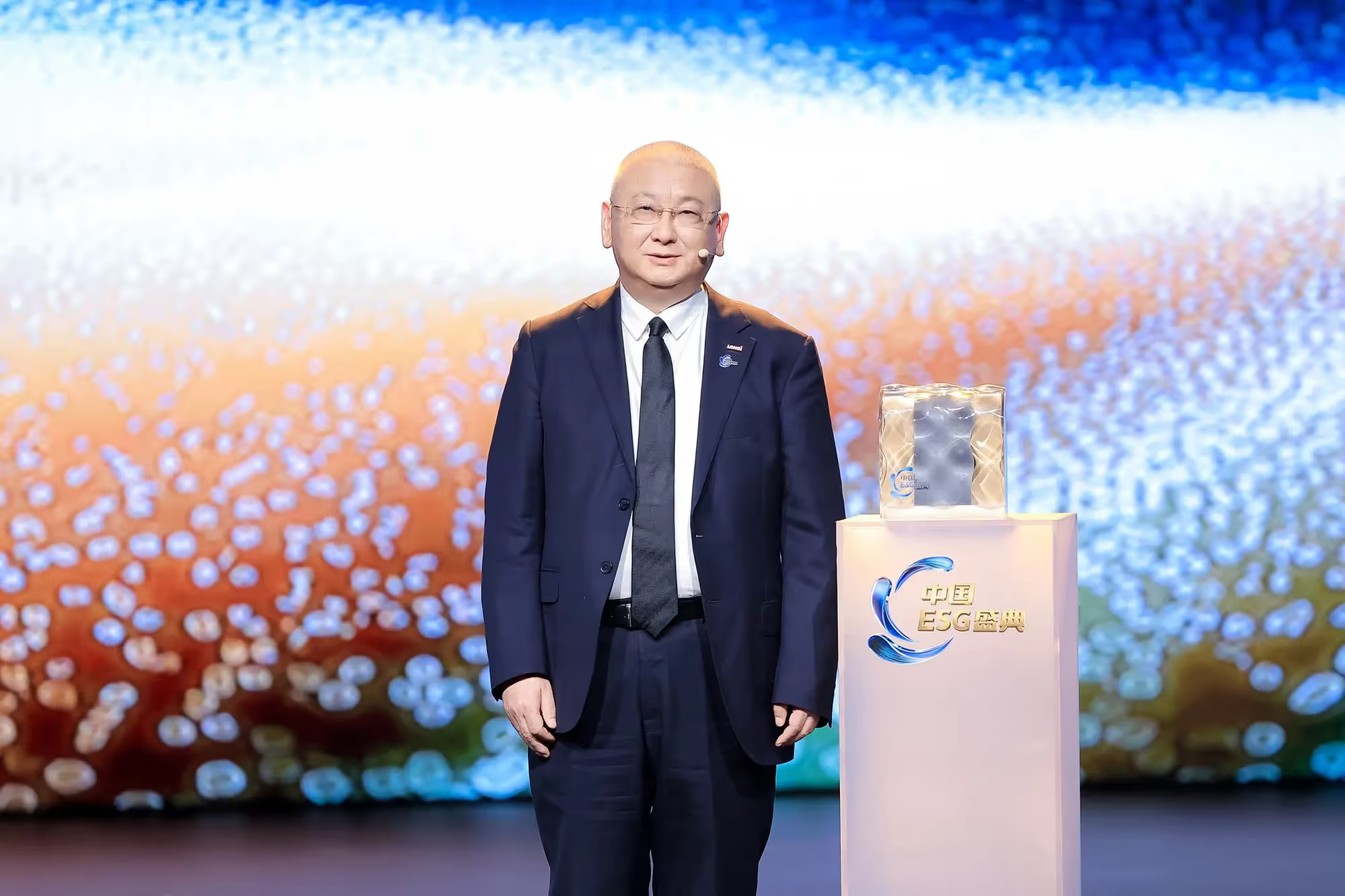
“To produce a cell, starting from raw ore, through polysilicon, ingot pulling, wafer slicing, and finally to cell and module assembly, it takes about two kilowatt-hours of electricity. But over its 30-year lifespan, this module will generate 235 kilowatt-hours of power. That’s more than a hundredfold amplification of energy,” said Li Zhenguo.
This performance is supported by a 37 percent reduction in operational emissions and a renewable energy ratio of 47.5 percent across the manufacturing facilities of the company. These metrics provide a transparent baseline for institutional partners performing lifecycle assessments and Scope 3 emission reporting under IFRS S2 and CSRD frameworks.
Technological innovation and defensibility in an increasingly competitive solar market
The solar industry is experiencing sustained competitive pressure, driven by rapid technological iteration and continuous product development. In this environment, the ability to innovate alone is no longer sufficient. At the 2026 China ESG Gala, Li Zhenguo addressed this dynamic directly. He emphasized that technological innovation must be both achievable and defensible in order to remain effective over time.
“To counter hyper-competition, you must rely on technological innovation to stay ahead,” Li stated. “But innovation alone is not enough. It must also be defensible.”
To illustrate this approach, he outlined four strategic “moats” that LONGi has established to protect and sustain its technological leadership:
- Intellectual property protection: A structured patent strategy ensures long-term legal security and safeguards innovation.
- Supplier collaboration: Close partnerships and exclusive arrangements with core suppliers stabilize access to critical materials.
- Process confidentiality: Key manufacturing know-how is protected through internalized and controlled production processes.
- Technical expertise: Continuous investment in skilled personnel supports ongoing research and development capabilities.
According to Li, these elements are essential for navigating industry cycles and maintaining stability in a highly competitive environment.
Within an ESG context, this approach extends beyond innovation itself. It contributes to supply chain reliability, governance structures, and long-term operational resilience, all of which are increasingly relevant for project developers and investors evaluating solar partners.

Lorem ipsum dolor sit amet, consectetur adipiscing elit. Suspendisse varius enim in eros elementum tristique. Duis cursus, mi quis viverra ornare, eros dolor interdum nulla, ut commodo diam libero vitae erat. Aenean faucibus nibh et justo cursus id rutrum lorem imperdiet. Nunc ut sem vitae risus tristique posuere.

.avif)