Sustainability is built into how we design, manufacture, and deliver renewable energy solutions
LONGi supports the energy transition with high-efficiency solar and storage technology, verified ESG data, supply chain traceability, and documented sustainability governance.
Across manufacturing, procurement, product development, and reporting, LONGi works to reduce environmental impact while helping customers meet growing requirements for low-carbon solar, responsible sourcing, and ESG compliance.
Emissions reduction targets are aligned with internationally recognized frameworks. Progress is tracked across Scope 1, 2, and 3, supported by regular reporting and third-party verification.
Supplier ESG due diligence covers key partners across the supply chain. Structured audits, risk assessments, and traceability systems support transparency and regulatory compliance.
Product carbon footprint data and lifecycle assessments provide transparency on environmental impact. This information supports procurement processes, ESG reporting, and project evaluation.
Developers, EPCs, procurement teams, and banks are asking harder questions about where products come from, how they're made, and what the environmental impact looks like on paper. LONGi's ESG work is built around five areas that speak directly to those questions.
Solar does more than generate electricity. It changes how energy gets produced and who can access it. LONGi backs this up with real emissions targets, grows its own use of renewable power year on year, and takes biodiversity seriously as part of how it operates.
![[Context Item 1 Image]](https://cdn.prod.website-files.com/67ced548bab6b3b33e311c46/69fb11a2c36247c6e965929d_longi-esg-climate-societal-impact-polar-bear-arctic-ice.avif)
When space is limited and yields matter over a 25-year project life, module efficiency makes a real difference to whether the numbers work. LONGi has pushed the limits of what silicon solar can do, holds 23 cell efficiency world records since 2021, and keeps translating those gains into what actually ships.
![[Context Item 2 Image]](https://cdn.prod.website-files.com/67ced548bab6b3b33e311c46/69f8a969f595b63620b7690c_longi-esg-solar-panels-residential-rooftop-urban-green-integration.avif)
The carbon story of a solar panel doesn't start when it generates electricity. It starts in the factory. LONGi has cut emissions in its own production, increased the share of renewable power it uses to make panels, and can back up product-level carbon figures with certified lifecycle data for any market that asks for it.
![[Context Item 3 Image]](https://cdn.prod.website-files.com/67ced548bab6b3b33e311c46/69fb1267843569b60e0854f2_longi-esg-low-carbon-manufacturing-robotic-assembly-solar-production.avif)
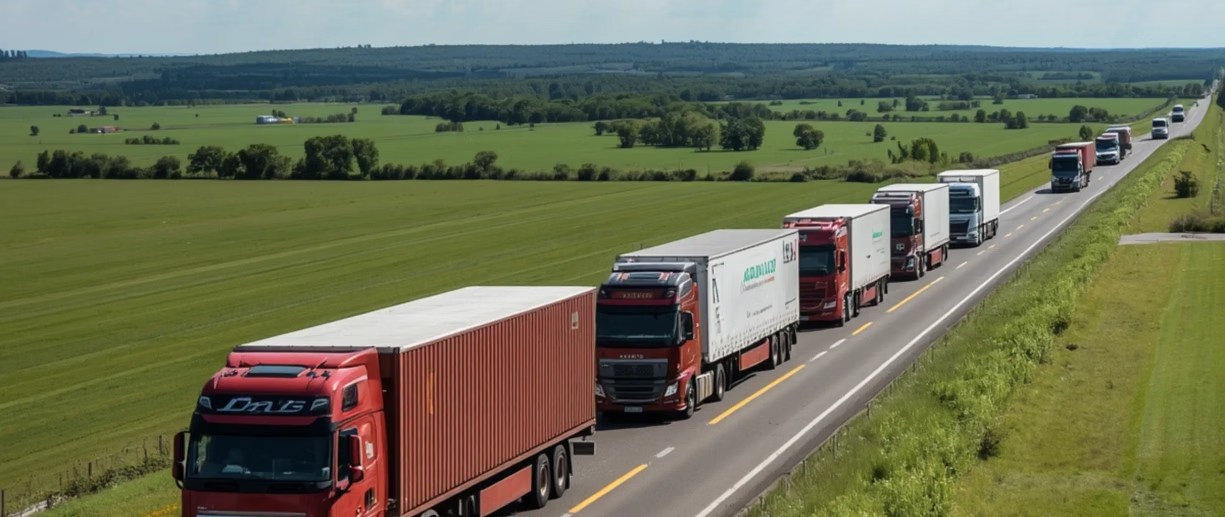
Solar supply chains are long and complicated. Knowing what's in your product, where it came from, and whether the people involved were treated fairly takes real work. LONGi screens all key suppliers, applies a binding Code of Conduct, and brings in independent auditors to verify what's actually happening across its supply chain.
![[Context Item 3 Image]](https://cdn.prod.website-files.com/67ced548bab6b3b33e311c46/69f8a9699f596cf7520d0a90_longi-esg-supply-chain-container-port-aerial-night-global-logistics.avif)
More projects stall because ESG documentation isn't in order than most people expect. LONGi holds an EcoVadis Gold rating, an MSCI ESG rating of A, and an S&P Global CSA score that puts it ahead of 96% of industry peers. The paperwork is there when it's needed.
![[Context Item 3 Image]](https://cdn.prod.website-files.com/67ced548bab6b3b33e311c46/69fb138d55160f48853a0cbd_longi-esg-compliance-bankability-bronze-bull-financial-credibility.avif)
LONGi's sustainability performance is independently verified and ranked by the world's leading ESG assessment bodies.


We build our ESG strategy around five focus areas to keep our processes transparent. Read exactly how LONGi approaches sustainable solar manufacturing from the factory to the supply chain.
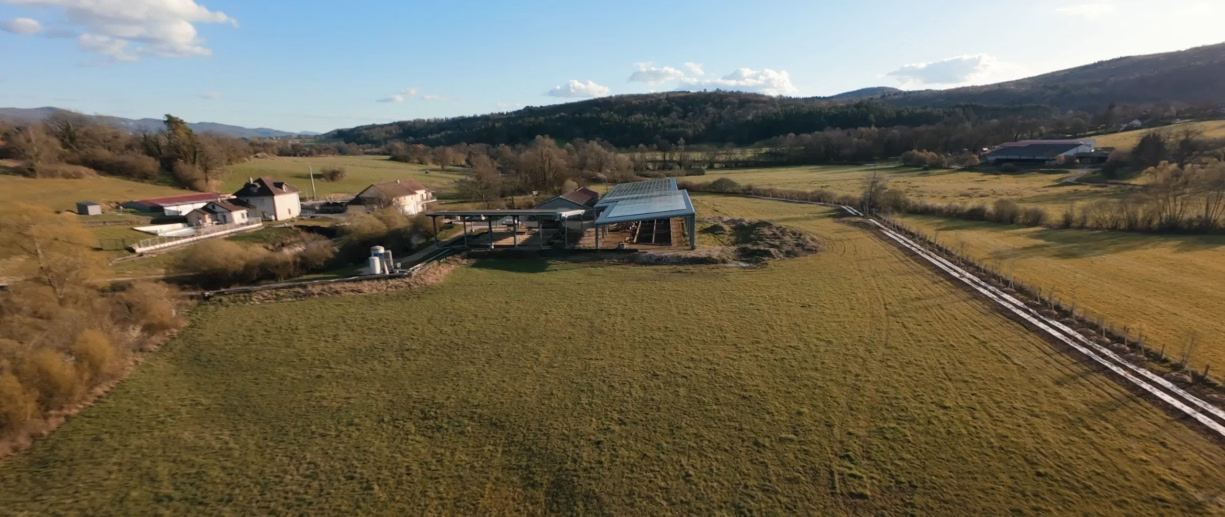
The global energy system is transitioning toward low-carbon sources. Solar power drives this shift by fundamentally changing how communities generate and access clean electricity. LONGi supports this transition with measurable decarbonization targets to continuously lower our operational impact. We are steadily increasing the amount of renewable electricity powering our own manufacturing facilities. We also carefully manage our operations to protect local biodiversity and ensure our solar deployment strategies help expand energy access globally.
Learn more →
Space limitations and long-term energy yield determine the financial success of any commercial solar project. Higher solar module efficiency generates more power from the exact same physical footprint. It also ensures stable performance over the lifetime of the installation to significantly improve the levelized cost of electricity (LCOE) and overall project returns. LONGi engineers advanced high-efficiency back contact technology to meet this demand. We focus on taking industry-leading lab records and scaling them into reliable mass production for developers and EPCs.

Solar power enables global decarbonization, but manufacturing the panels carries its own environmental impact. We actively reduce our manufacturing carbon footprint through targeted energy efficiency upgrades and increased renewable power use across our facilities. Procurement teams increasingly require precise emissions data for their own compliance. To provide this, we calculate our product carbon footprint using rigorous lifecycle assessments. Independent bodies verify this data so our customers have reliable environmental product declarations to meet strict regulatory reporting needs.

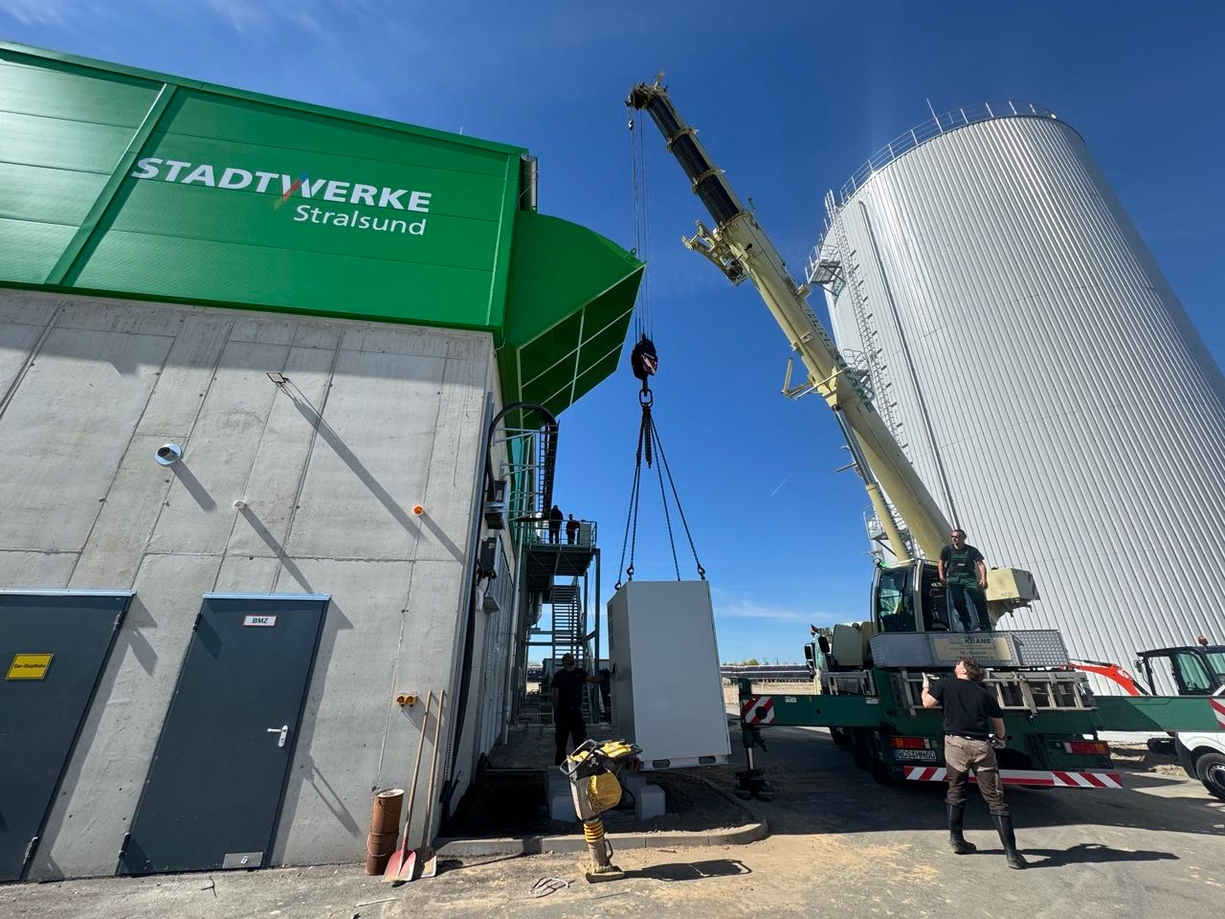
Global solar supply chains are complex and involve multiple tiers of material processing. Verifying the exact origin of these materials and ensuring fair labor practices requires serious due diligence. LONGi enforces a strict supplier code of conduct and conducts thorough ESG assessments across our entire procurement network. We utilize third-party traceability audits to track materials from the original source to the finished module. This process provides project developers with the transparent documentation required to prove responsible sourcing.

Financial institutions and corporate buyers look closely at ESG compliance before financing renewable energy projects. Regulatory frameworks like the CSRD and national supply chain laws now heavily influence project approvals. LONGi delivers the structured sustainability reporting and third-party verified data required to pass these strict reviews. We hold top-tier corporate ratings from EcoVadis, MSCI, and S&P Global. This clear documentation gives our partners the exact proof they need to secure financing and move projects forward smoothly.


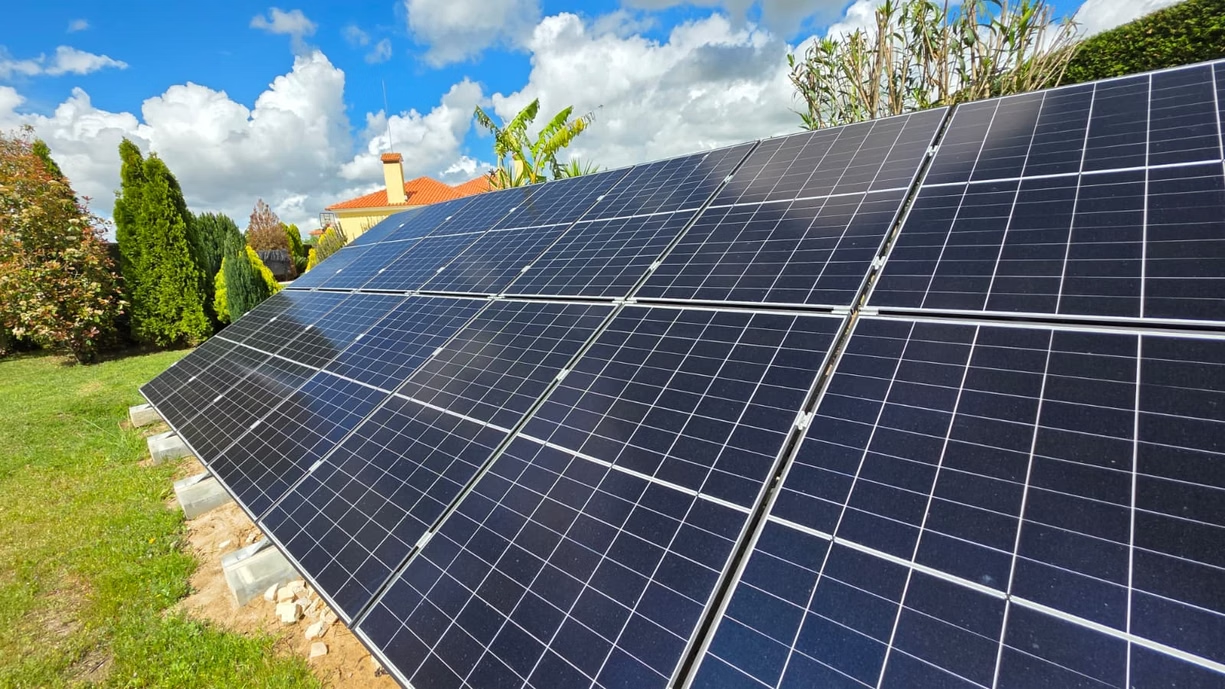
HPBC 2.0 technology optimizes land use and reduces LCOE by up to 4.47 percent. Learn how high-efficiency Back Contact modules solve space constraints for utility and rooftop solar.
Read Blog →
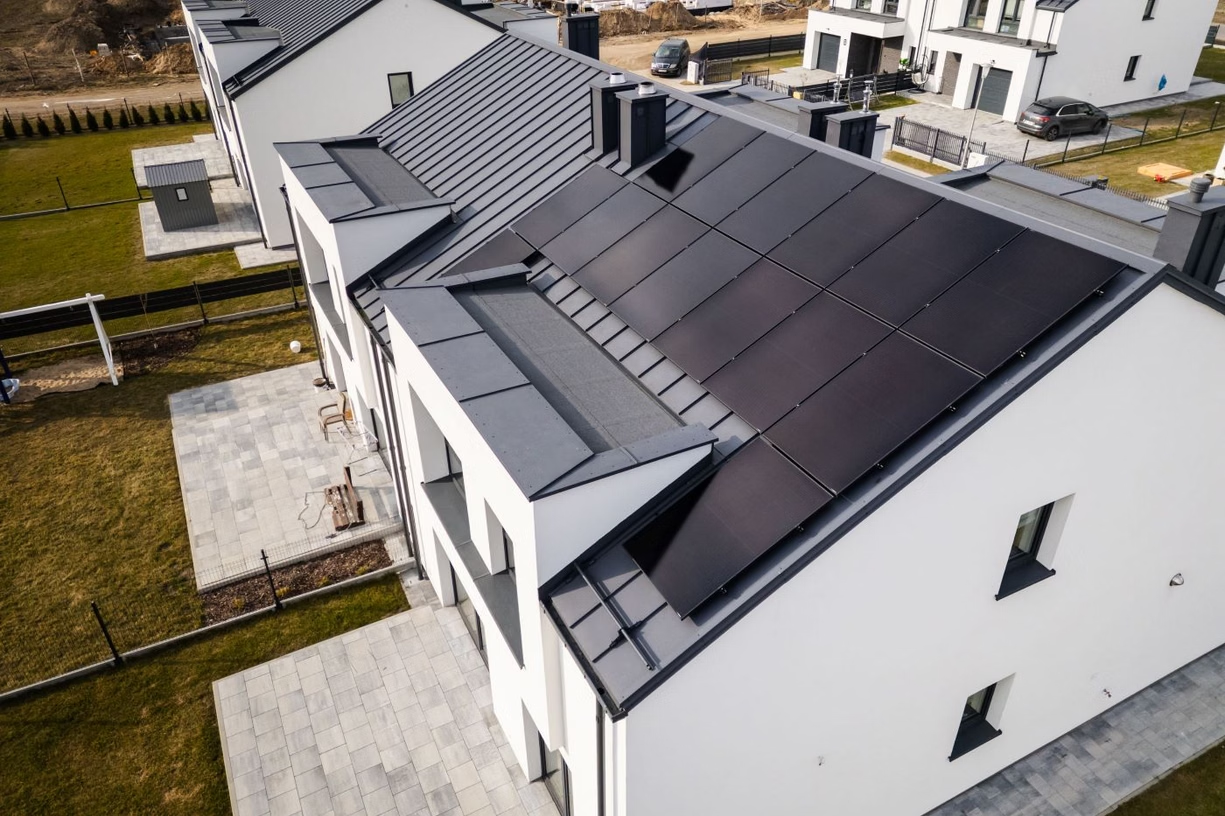
A 42.5 kWp rooftop solar system at a rural school in Spain enables shared energy use and supports community-level energy access and resilience.
Read Blog →Straight answers to the ESG topics that matter most in procurement and due diligence.
How does LONGi ensure there is no forced labour in its supply chain?
Forced labour is an absolute red line. Every supplier — across all tiers — must sign LONGi's Supplier Code of Conduct before receiving a purchase order. Annual on-site audits, conducted by LONGi's own SA8000-certified team and independent third parties (SGS, TÜV Rheinland, PI Berlin, STS), cover 84 audit criteria including freedom of movement, wages, and working conditions. In 2024, all silicon material suppliers passed these audits with zero forced labour identified.
Can LONGi trace the origin of its polysilicon?
Yes — all the way back to the mine. LONGi's traceability system links each module to its polysilicon supplier by batch number and purchase order, covering the full chain: quartz → metallurgical-grade silicon → polysilicon → ingot → wafer → cell → module. The system follows ISO 9001:2015 and SEIA standards and has been independently verified by SGS, STS, PI Berlin, and CEA. A formal Traceability Information Report is available for every shipment upon request.
What audits does LONGi carry out on its suppliers?
In 2024, LONGi conducted 71 on-site audits across 48 key suppliers, covering 73% of bill-of-materials procurement value. High-risk suppliers are audited annually; medium-risk suppliers every three years. Every audit covers human rights, health & safety, environment, business ethics, and management systems. All findings are tracked through a closed-loop corrective-action process with defined deadlines — red-line violations trigger immediate suspension.
How does LONGi manage conflict minerals?
LONGi commits to sourcing 100% of 3TG minerals (tin, tungsten, tantalum, gold) from non-conflict regions. All suppliers must complete the Responsible Minerals Initiative's Conflict Minerals Reporting Template (CMRT), and upstream smelters are verified against the Responsible Minerals Assurance Process (RMAP). LONGi follows the OECD five-step due diligence framework. In 2024, survey coverage of all direct 3TG suppliers reached 100%, with no conflict-region sourcing identified.
What happens if a supplier breaches LONGi's ESG standards?
Violations of red-line issues — child labour, forced labour, violence, sub-minimum wages, major environmental offences, or commercial bribery — result in immediate suspension or permanent exclusion. Serious issues must be corrected within four months; general issues within six months. Suppliers who miss deadlines face reduced procurement share or full elimination, reviewed by the Supplier Management Committee. There is no path to reinstatement for confirmed red-line violations.
What is the carbon footprint of a LONGi module?
LONGi calculates Product Carbon Footprints (PCF) in line with ISO 14067, covering the full cradle-to-gate lifecycle. As module efficiency increases and manufacturing is powered by more renewable energy, the lifecycle carbon intensity per watt-peak falls year-on-year. Detailed PCF documentation is available on request and disclosed in LONGi's annual Sustainability Report.
Has LONGi set science-based emissions targets?
Yes. LONGi has submitted targets to the Science Based Targets initiative (SBTi), aligning its reduction pathway with the Paris Agreement's 1.5°C scenario. The company has also joined RE100 (commitment to 100% renewable electricity) and EP100 (doubling energy productivity), with systematic reduction plans covering Scope 1, 2, and 3 emissions across operations and the full value chain.
How does LONGi reduce Scope 3 emissions in its supply chain?
LONGi requires key Tier-1 suppliers to set their own carbon reduction targets and obtain ISO 14001 certification. Its supplier capacity-building programme — targeting 95% procurement coverage by 2028 — includes dedicated environmental management training, GHG reporting guidance, and support for certification. LONGi also actively promotes the procurement of green, low-carbon input materials, including granular silicon produced with renewable energy.
What renewable energy does LONGi use in production?
LONGi has committed to 100% renewable electricity across its global operations through the RE100 initiative. The company sources green power via renewable energy certificates (RECs), on-site distributed generation, and power purchase agreements. Its energy management system is certified to ISO 50001, and energy intensity per unit of output is tracked and reported annually.
How does LONGi support customers affected by the EU Carbon Border Adjustment Mechanism (CBAM)?
LONGi's existing GHG accounting framework — covering Scope 1 and 2 emissions at production facility level — provides the data foundation required for CBAM embedded-carbon declarations. Customers importing LONGi products into the EU can request product-level emissions documentation directly from their LONGi account manager. LONGi continues to monitor evolving CBAM implementation guidance and will update its reporting outputs accordingly.
Is LONGi compliant with Germany's Supply Chain Due Diligence Act (LkSG)?
LONGi's due diligence framework is aligned with the requirements of the Lieferkettensorgfaltspflichtengesetz (LkSG). Risk-based human rights and environmental due diligence is conducted across the supply chain, grievance channels are open to external stakeholders, and results are disclosed in the annual Sustainability Report. LONGi's compliance management system is independently certified to ISO 37301.
How does LONGi support our CSDDD obligations as a customer?
The EU Corporate Sustainability Due Diligence Directive requires companies to identify and address adverse impacts in their upstream value chains. LONGi proactively supports downstream compliance by providing supply chain transparency data, traceability reports, supplier audit results, and ESG due diligence documentation. LONGi's supplier questionnaire covers all CSDDD-relevant topics: forced labour, environmental compliance, business ethics, and human rights.
What data can LONGi provide to support our CSRD reporting?
LONGi's annual Sustainability Report is prepared with reference to GRI Standards and discloses verified data on GHG emissions, supply chain audits, human rights performance, and governance. Customers in scope for the Corporate Sustainability Reporting Directive can draw on LONGi's disclosures, product carbon footprint documentation, and traceability reports to populate upstream data points in their own double-materiality assessments and value-chain disclosures.
How does LONGi address the EU Forced Labour Regulation?
Forced labour prevention is a non-negotiable red line in LONGi's supply chain policy. The company's traceability system — independently verified by SGS, PI Berlin, TÜV Rheinland, CEA, and Sinovoltaics — provides the documentary evidence needed to demonstrate that products entering the EU market are free from forced labour. In 2024, all silicon supplier on-site audits confirmed zero instances of forced or child labour.
Does LONGi publish a Modern Slavery Statement?
Yes. LONGi Solar Australia publishes an annual Modern Slavery Statement under Australia's Modern Slavery Act 2018, covering supply chain risks, mitigation actions, governance accountability, and improvement commitments. The statement is approved at board level and publicly available. LONGi's global human rights due diligence framework is aligned with the UN Guiding Principles on Business and Human Rights (UNGPs) and applies consistently across all operating jurisdictions.