LONGi unveils Solar-Plus-Storage strategy for UK: Hi-MO 9 modules and integrated systems to tackle fragmentation
Date
April 17, 2026
read time
5
Minutes
Subscribe to the LONGi Newsletter

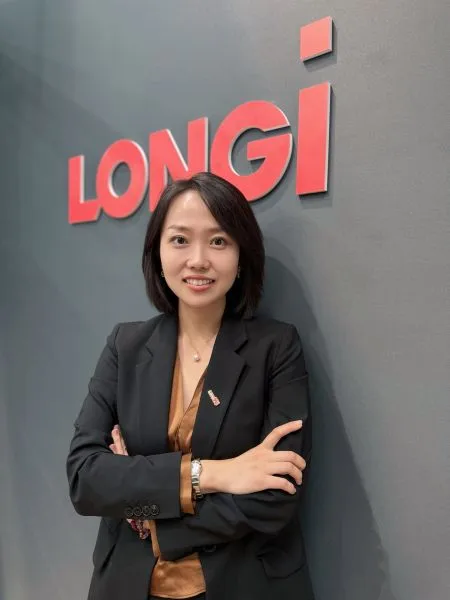
LONGi recently unveiled the LONGi ONE strategy, moving away from being a component manufacturer toward providing integrated 'Solar-Plus-Storage' systems. We spoke to Leticia Han, General Manager UK & Ireland at LONGi Solar, about the company’s new approach.
Solar Power Portal: Can you walk us through the 'One System, One Platform, One Responsibility' model and how this 'native integration' specifically solves the fragmentation and warranty 'blame-game' issues currently facing UK solar developers?
Leticia Han: The LONGi ONE strategy represents a fundamental pivot from being a component supplier to becoming a comprehensive partner in the "Solar Generator" era. By moving toward a natively integrated "Solar-Plus-Storage" system, we are addressing the historic pain points of fragmented, multi-vendor architectures where hardware and software often struggle to communicate effectively. Our "One System, One Platform, One Responsibility" model ensures that every component, from our BC solar modules to our 5S storage architecture, is designed from the ground up to work in harmony, managed by a single AI-driven software platform.
For UK developers, this specifically eliminates the common "blame-game" during commissioning and long-term operations, as LONGi acts as the sole point of accountability for the entire system’s performance and warranty.
This unified approach reduces system losses, accelerates deployment timelines by up to 30%, and provides a clear, single-contact service model that significantly de-risks the investment for EPCs and asset owners.
LONGi recently launched the Hi-MO 9 (Version 2) featuring HPBC 2.0 technology. Beyond raw efficiency, what are the specific performance breakthroughs, such as spectral response in low-light conditions, that allow it to outperform standard TOPCon technology in the UK’s unique climatic conditions?
While the Hi-MO 9 delivers an industry-leading efficiency of up to 24.8%, its true value in the UK market lies in its HPBC 2.0 (Hybrid Passivated Back Contact) technology, which excels in the diffuse and low-light conditions typical of British weather.
Unlike standard TOPCon modules, the HPBC 2.0 cell architecture removes front-side metal grid shading, allowing for a superior spectral response and higher energy absorption during the early morning, late evening, and overcast days.
Our tests show that this technology maintains more stable power generation periods compared to TOPCon, effectively "stretching" the solar day and providing a more consistent energy profile. Furthermore, the Hi-MO 9 features a lower temperature coefficient and enhanced degradation resistance, ensuring that even in the UK’s humid and variable climate, the lifetime energy yield remains significantly higher than traditional N-type alternatives.
To make a concrete example of BC performance, empirical data from projects in Southern Spain shows a watt-for-watt power gain of 2.4% to 3.4% compared to TOPCon. For a large-scale developer, that's not just extra energy, it’s a 3.9% to 4.4% reduction in LCOE, making projects viable even in a high-competition environment.
LONGi emphasised that the Hi-MO 9 is more than just a flagship module; it is the foundation for a 'full-scenario' product strategy. Could you elaborate on the specific scenario-based variations and explain why LONGi has moved away from a 'one-size-fits-all' approach to invest so heavily in these customised, application-specific products?
The industry has long suffered from a "one-size-fits-all" mentality, but the UK’s diverse landscape, ranging from coastal regions to high-soiling industrial zones, requires a more nuanced approach. We have invested heavily in scenario-based variations like the Hi-MO 9 Hydro-Clear, which features a specialised frame design that prevents dust and water accumulation, a critical advantage for maintaining efficiency in high-humidity or high-soiling environments.
In addition to managing moisture and dust, our scenario-based strategy addresses the physical threats posed by extreme weather. The Hi-MO 9 Ice Shield, for example, is engineered specifically for regions prone to heavy snowfall and severe hailstorms.

By moving away from a single module design, we allow developers to select products optimised for specific environmental stressors, such as high-wind loads or coastal salt-mist conditions. This application-specific strategy ensures that the "Solar Generator" is not just efficient on paper but is physically resilient and optimised for the precise geographic coordinates of the project, ultimately maximising the return on investment over a 30-year lifecycle.
Many Tier-1 competitors are moving toward 'one-stop-shop' solutions. When a UK EPC compares LONGi ONE to other offerings, what are the unique technical differentiators in your 5S storage technology and iCCS fault detection that provide a superior LCOE and LCOS?
The technical differentiators of LONGi ONE lie in our deep integration of "5S" technology, integrating the BMS, iCCS, TMS, EMS, and PCS into a unified architecture. A standout innovation is our patented iCCS (Intelligent Cell Connection System), which provides millisecond-scale fault detection and cell-level monitoring to reduce failure rates by 60%, while a modular design cuts deployment times by nearly 30%.
While many competitors offer "one-stop-shop" solutions that are essentially bundled third-party components, our iCCS is a native development that replaces complex wiring harnesses, reducing internal connections by 80% and providing a 3 to 5-minute early warning before potential thermal runaway events.

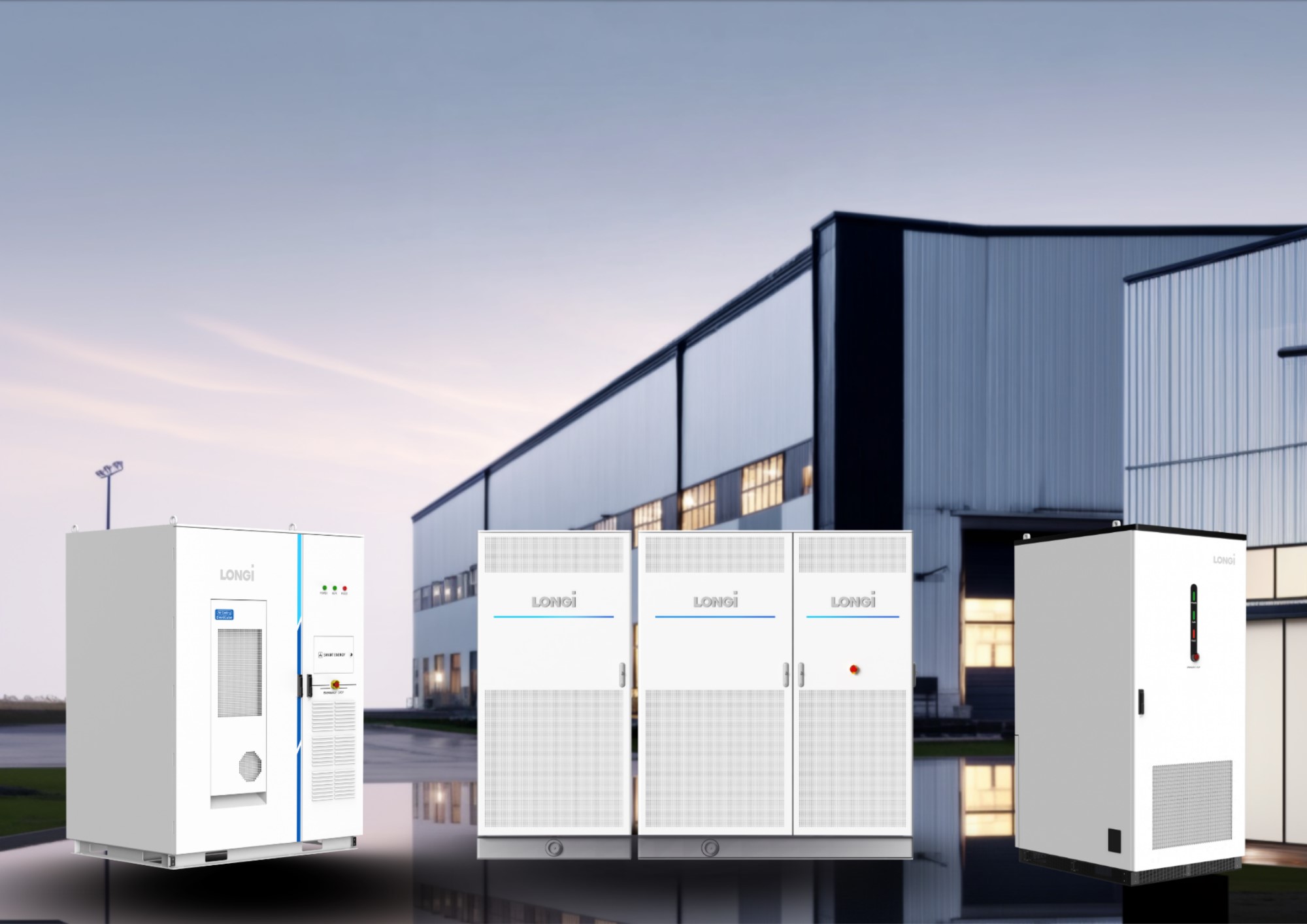
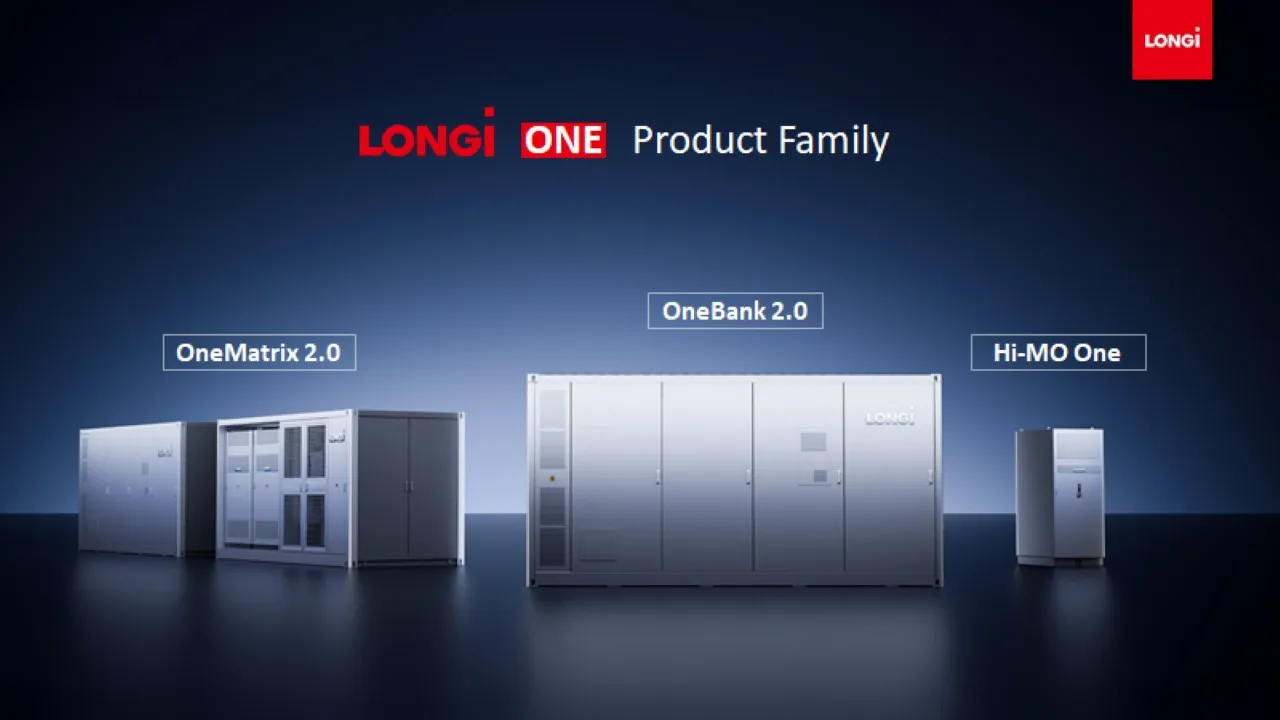
This approach indeed eliminates the fragmented accountability of traditional multi-vendor architectures by providing a single partner for the entire project lifecycle, utilising the OneBank 2.0 and OneMatrix 2.0 solutions for large-scale utility projects. For the C&I sector, the Hi-MO One system and EnergyOne AI platform combine to deliver a total system efficiency of up to 90.3% with sub-20ms response times, ensuring businesses can meet the UK’s stringent grid requirements while maximising energy independence.
This level of predictive safety and technical synergy directly lowers the Levelized Cost of Electricity (LCOE) and Storage (LCOS) by minimising downtime, reducing O&M costs, and extending the operational health of the battery cells through smarter thermal management.
Looking at the next 3 to 5 years, how does the UK fit into LONGi’s global '2830 Plan'? Can we expect a localised service centre to be established in the UK, and what does the specific rollout roadmap look like for the UK’s utility and C&I sectors?
The UK is a cornerstone of LONGi’s global "2830 Plan," which aims to establish 30 localised service centres by 2028 to provide end-to-end lifecycle support. We are currently in the process of scaling our localised presence in the UK to ensure that our technical and after-sales support is as high-performing as our hardware.
Our roadmap for the UK utility and C&I sectors involves a phased rollout of the OneBank 2.0 and OneMatrix 2.0 solutions for large-scale utility projects and the Hi-MO One system for commercial applications, backed by a dedicated UK-based service infrastructure.
This means that UK clients will not only benefit from our global R&D but will have immediate access to local experts who understand the specific grid requirements and operational nuances of the British market, ensuring rapid response times and long-term asset security.
To meet 2030 targets, the UK needs more than just solar panels; it needs a secure, ethical, and stable energy ecosystem. How is LONGi strengthening its UK supply chain to withstand global volatility, and what role does your ESG strategy play in ensuring that LONGi’s integrated solar-plus-storage solutions provide the reliable, low-carbon backbone the UK grid requires?
Achieving the UK’s 2030 clean energy mandate requires a shift from viewing solar as a commodity to treating it as critical national infrastructure. To support this, LONGi is evolving its "Glocal" supply chain strategy, which focuses on regionalising logistics and technical support to insulate the UK market from external supply chain pressures and market fluctuations. By establishing localised warehousing and service hubs under our "2830 Plan," we ensure that the UK has a continuous, secure flow of technology that doesn't rely solely on long-distance, high-carbon logistics.
From an ESG perspective, we recognise that a truly green transition must be ethical at its source. LONGi has pioneered the "Solar for Solar" concept, utilising renewable energy to manufacture our solar products, significantly lowering the embodied carbon of every module that lands on British soil. We maintain rigorous supply chain transparency through third-party audits and the implementation of our "Green Partner" program, ensuring that every step of our production meets the highest global standards for environmental stewardship.
Ultimately, by combining this ethical sourcing with our integrated storage technology, we are providing more than just energy; we are providing "certainty." Our integrated systems stabilise the UK grid by smoothing out intermittency, while our ESG-led supply chain ensures that the backbone of the UK’s energy future is built on a foundation that is as socially responsible as it is technically reliable.
Finally, bridging global R&D with local reality is a challenge. How is LONGi UK working to deepen partnerships with local developers and EPC contractors to ensure these high-efficiency innovations are optimised for the specific regulatory and operational requirements of the British market?
Bridging the gap between our global R&D hubs and local realities is a top priority for LONGi, not only in the UK but for the whole European region, and we achieve this through deep, collaborative partnerships with local EPCs and developers.
We don't just supply equipment; we engage in technical co-engineering to ensure our systems are fully compliant with UK-specific regulatory frameworks and grid connection standards. By hosting local technical workshops and providing comprehensive GSE (Global Service Engineering) evaluations, we help our partners optimise system designs for British topography and climate.
This feedback loop between the UK market and our R&D teams ensures that the next generation of LONGi products is inherently "British-ready," combining world-class innovation with the practical, operational expertise required to succeed in the UK’s unique solar landscape.
LONGi will be at Solar and Storage Live in London on 29-30 April, exhibiting at stand E70c. Speak with the team there to find out more.

Lorem ipsum dolor sit amet, consectetur adipiscing elit. Suspendisse varius enim in eros elementum tristique. Duis cursus, mi quis viverra ornare, eros dolor interdum nulla, ut commodo diam libero vitae erat. Aenean faucibus nibh et justo cursus id rutrum lorem imperdiet. Nunc ut sem vitae risus tristique posuere.