Contact info
Nadine Bütow
Head of Corporate Communications, LONGi Distributed Generation Europe
nadinebuetow@longi.comSubscribe to the LONGi Newsletter

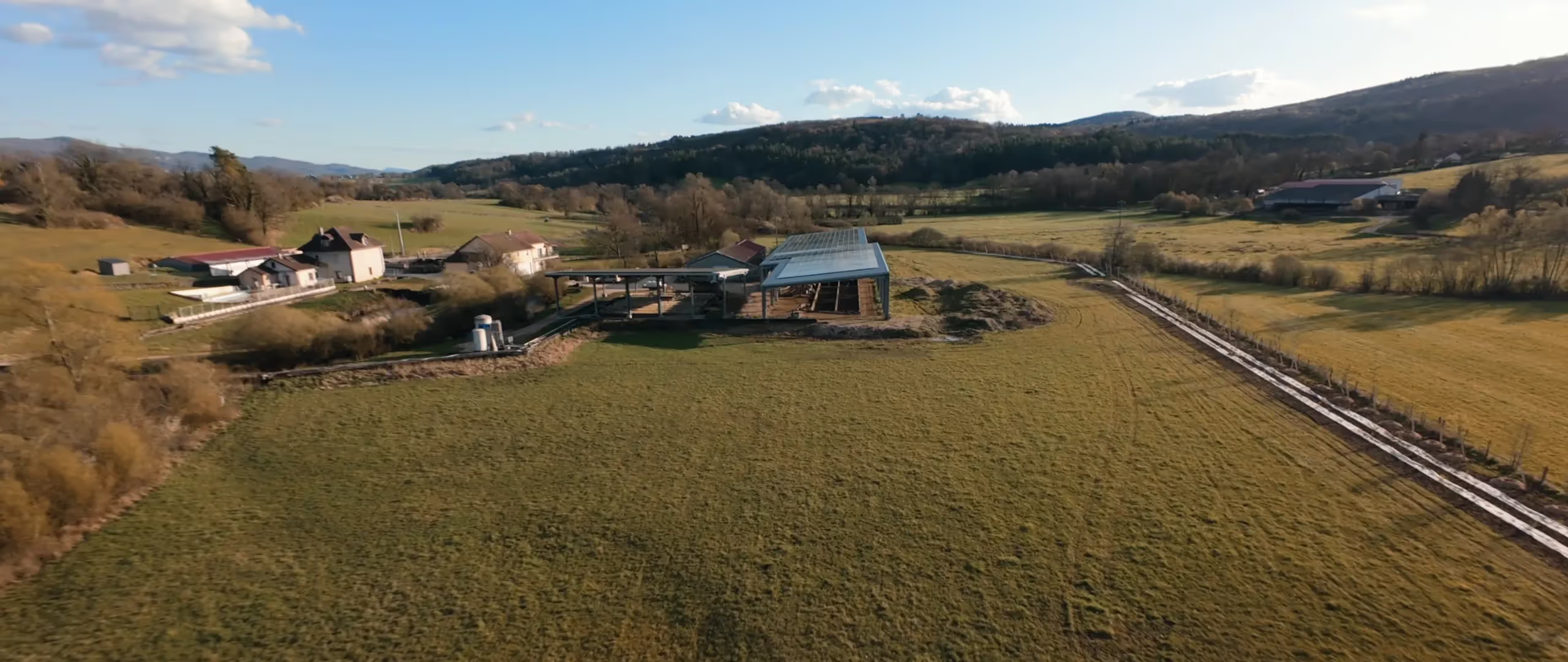
A trout farming operation in eastern France is demonstrating how photovoltaic infrastructure can address operational, environmental, and energy challenges in aquaculture. At Pisciculture Beuque, solar canopies installed above fish basins combine physical protection with on-site renewable energy generation, supporting long-term productivity and cost stability.
The project integrates nearly 1,200 back contact photovoltaic modules from LONGi, with a total installed capacity of approximately 500 kWp. Implemented in collaboration with POwR Connect, a French photovoltaic installer and EPC, the system is designed to cover a significant share of the site’s annual electricity demand of around 120,000 kWh, with the potential to transition toward energy-positive operation following the planned addition of storage.
PV as physical barrier addresses core challenges in aquaculture
Fish farming operations face increasing pressure from environmental exposure, rising energy costs, and biological risks. At Pisciculture Beuque, predation by fish-eating birds has been a persistent issue, affecting both stock levels and sanitary conditions.
The photovoltaic canopy system creates a physical barrier that limits bird access to the basins, reducing direct losses and lowering the risk of disease transmission. At the same time, the shaded environment contributes to more stable water temperatures and reduces stress for the fish, supporting healthier growth conditions.
“Predation from birds is a major challenge for us, both economically and in terms of sanitary risks,” said Pascal Beuque, owner of the fish farm. “With this solution, we are able to protect the basins while also addressing our energy needs.”
Project video:
Integrated energy generation and operational efficiency
The installation uses high-performance back contact modules from LONGi’s Hi-MO X10 series. By relocating electrical contacts to the rear side of the cell, the design increases the active surface area available for light absorption, supporting high efficiency and stable performance.
The project is coupled with power optimizers and inverters, with a total capacity of 400 kVA. This configuration supports optimized system performance, including under partial shading conditions inherent to canopy structures.
The system supplies electricity to key operational processes, including basin aeration, water circulation, cold storage, and site infrastructure. Production is split between self-consumption and grid export, providing both cost savings and additional revenue potential.
Environmental impact and working conditions improve alongside energy cost stability
Beyond energy generation, the canopy structure contributes to environmental management. By limiting direct solar exposure, it reduces the temperature of water discharged from the facility, helping to mitigate impacts on surrounding ecosystems.
The installation also improves working conditions on site. Staff are protected from rain, snow, and direct sunlight, enabling safer and more consistent operations throughout the year.
Initial considerations around the project focused on financial feasibility. According to the operator, similar installations in other agricultural sectors demonstrated that photovoltaic canopies could support both operational needs and economic performance.
“It initially seemed like an investment that would be difficult to justify,” Beuque said. “But when we looked at the long-term energy savings and the added operational security, it became a viable option.”
The system is expected to reduce energy costs significantly and provide protection against electricity price volatility. With the planned integration of storage, the site aims to achieve a high degree of energy autonomy.
“Applications like Pisciculture Beuque highlight how photovoltaic infrastructure can be adapted to specific industry requirements. By combining energy generation with functional site benefits, these systems contribute to more stable and efficient operations in sectors such as aquaculture,” said Alain Kruy, Product Solution Manager at LONGi for France.
Photovoltaic canopies provide a practical pathway to more resilient and energy-independent aquaculture operations
The project was developed as an integrated solution, combining structural design and photovoltaic deployment. Installation, maintenance, and system monitoring are managed by Héliophoton, ensuring long-term performance and operational reliability.
Implementation was carried out in collaboration with POwR Connect, responsible for project delivery. Close coordination between the fish farm operator, the installation partner, and technology providers supported timely completion, including advisory, logistics, and system integration.
The Pisciculture Beuque installation illustrates how photovoltaic infrastructure can extend beyond energy generation to address sector-specific challenges. By combining biological protection, environmental management, and on-site power production, the project demonstrates a practical approach to improving resilience in aquaculture operations.
With increasing pressure on food production systems to reduce environmental impact while maintaining efficiency, integrated solutions of this type are expected to play a growing role across agricultural sectors.

Lorem ipsum dolor sit amet, consectetur adipiscing elit. Suspendisse varius enim in eros elementum tristique. Duis cursus, mi quis viverra ornare, eros dolor interdum nulla, ut commodo diam libero vitae erat. Aenean faucibus nibh et justo cursus id rutrum lorem imperdiet. Nunc ut sem vitae risus tristique posuere.