Solar-powered water for a maternity clinic in rural Mozambique

Date
August 2, 2024
read time
4
Minutes
Subscribe to the LONGi Newsletter

In many parts of the world, access to clean water and reliable electricity is taken for granted. In rural regions of Mozambique, it can determine whether a health facility is able to operate safely at all. That reality shaped a solar-powered freshwater project in the village of Linga Linga, in Mozambique’s Inhambane province, where solar energy now supports a maternity clinic serving local families.
The initiative brought together LONGi, Senergia, and the nonprofit Project Vita. Their shared goal was straightforward and deeply practical, to provide a stable supply of clean water using solar power, in a place where grid infrastructure is limited and unreliable.
Reliable water access becomes a foundation for safe maternity care
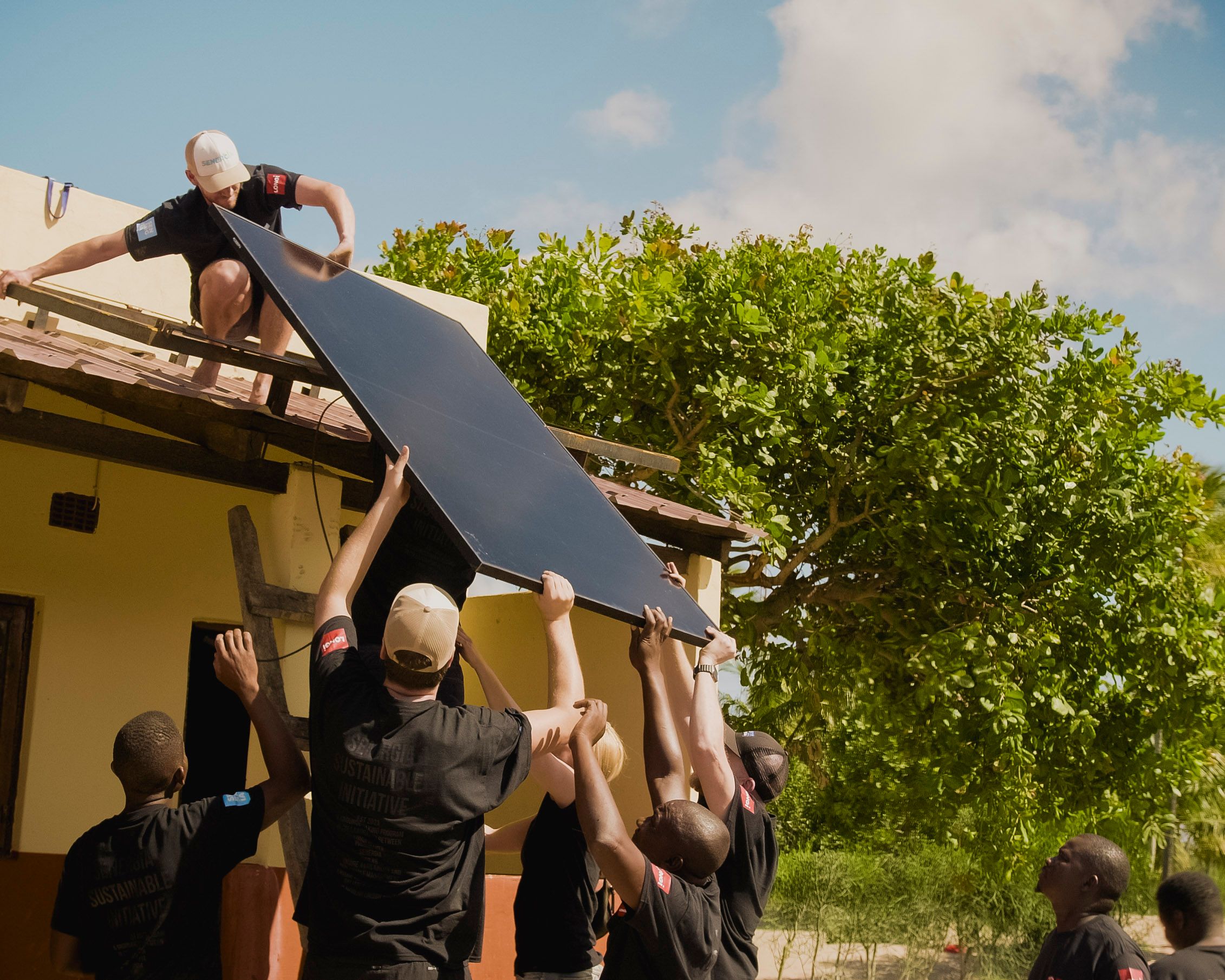
The project began with the construction of a water tower next to the maternity clinic. Solar panels were installed on the clinic’s roof to power a water pump that continuously fills a storage tank. From there, freshwater is supplied directly to the clinic, enabling basic hygiene and daily medical routines.
This kind of access remains rare in many rural areas. Clean, running water is essential for sanitation and hygiene, especially in maternity care, where infection risks can be life-threatening for both mothers and newborns. Since the system was completed in May 2024, 58 babies have been born at the Linga Linga maternity clinic.
Michel Olofsson, founder of Project Vita, explains why water was central to the project from the start:
“When we were asked by Morrumbene’s mayor to help build a maternity clinic, we knew that basic hygiene would be just as important as the building itself. Access to running freshwater is a basic human right, yet in rural Africa it is still the exception, even in healthcare facilities. Partnering with Senergia and LONGi made it possible to turn this necessity into reality.”
Why this village needed a clinic in the first place
For families in Linga Linga, giving birth safely used to mean traveling around 30 kilometers to the nearest hospital in Morrumbene. For many women, that distance was simply too far. Births often took place at home or on the road while attempting to reach medical help.
Local authorities, together with village leaders, asked Project Vita for support to improve conditions in the area. The maternity clinic was built within the village, next to an existing health clinic that had remained closed for three years due to a lack of energy. With solar power now available, that facility can operate again.
Beyond childbirth, the maternity clinic also provides antenatal and postnatal care, creating continuity in medical support for mothers and infants.
For Senergia, the project reflects a deliberate choice to focus on initiatives that directly benefit local communities. Mozambique remains one of the world’s poorest countries, with the majority of its population living in rural areas. Around 60 percent of people nationwide lack access to electricity. In Linga Linga, that figure is closer to 99 percent.
As Senergia’s project manager Anton Öbrink puts it: “When we decided to engage in NGO work, it was important that our contribution reached people directly. We wanted to show that if a solution works in a place like Linga Linga, it can work anywhere.”
Working with the community is important in Africa
From planning through implementation, Project Vita worked closely with local authorities and community members. Together, they identified a solution that was technically feasible, easy to maintain, and well adapted to local conditions. That collaboration helped ensure the system could operate reliably over time.
Today, the clinic averages around 17 births per month. For the nurses working there, access to clean tap water changes daily routines. It reduces infection risks during delivery and improves overall working conditions in a demanding environment.
Globally, maternal mortality has declined over the past two decades, yet the African region continues to account for the majority of maternal deaths worldwide. Reliable healthcare infrastructure, including clean water and stable energy supply, remains a decisive factor in improving outcomes for mothers and newborns.
“Each of these installations is essential,” Michel Olofsson says. “They quite literally save lives.”
When solar technology is applied with purpose, its impact extends well beyond energy generation
From LONGi Europe’s point of view, the project shows how solar technology can make a difference when it is applied thoughtfully and with the right partners. The system uses back contact modules from the Hi-MO Series, which have demonstrated reliable performance under challenging climatic conditions.
Nadine Bütow, Head of Communications for LONGi Europe, reflects on the experience: “It was a privilege to be involved in this project and to see what can be achieved when expertise and commitment come together. Initiatives like this show that even relatively small efforts can make a tangible difference and improve everyday life for many people. In Africa, and especially in rural regions, solar energy has an important role to play because it is decentralized, scalable, and well suited to local conditions. The modules used here have proven to be reliable and high-performing, even under challenging climatic conditions. I hope this project encourages others to engage and contribute in similar ways.”
Projects like the one in Linga Linga rarely draw attention for their size or scale. Their impact is measured differently, in safer births, healthier mothers, and clinics that can function day after day. In places where basic infrastructure is still missing, solar energy continues to prove its value as a quiet but powerful enabler of everyday care.
Learn more about the project here:

Lorem ipsum dolor sit amet, consectetur adipiscing elit. Suspendisse varius enim in eros elementum tristique. Duis cursus, mi quis viverra ornare, eros dolor interdum nulla, ut commodo diam libero vitae erat. Aenean faucibus nibh et justo cursus id rutrum lorem imperdiet. Nunc ut sem vitae risus tristique posuere.


_Small.jpg)