Toyota's Green Strategy: Solar Integration for Net-Zero Goals with LONGi

Data
August 25, 2025
czas czytania
5
Minuty
Zapisz się do newslettera LONGi

Toyota's "Environmental Challenge 2050": A Roof-Top Revolution Begins
Toyota's commitment to environmental stewardship is deeply ingrained in its history. From pioneering the first mass-produced hybrid vehicle, the Toyota Prius Hybrid, to its groundbreaking work in hydrogen fuel cell electric vehicles (FCEV) like the Mirai and the "bZ" (beyond Zero) lineup of battery electric vehicles (BEV), Toyota has consistently led the charge in clean transportation. Today, this commitment extends beyond products to the core of its value chain – manufacturing.
The ambitious "Toyota Environmental Challenge 2050" outlines a clear vision for the future:
- A 90% reduction in CO₂ emissions across the lifecycle of new vehicles (compared to 2010 levels).
- Achieving carbon neutrality in its global manufacturing operations.
- Establishing a resource-circulating production and recycling system.
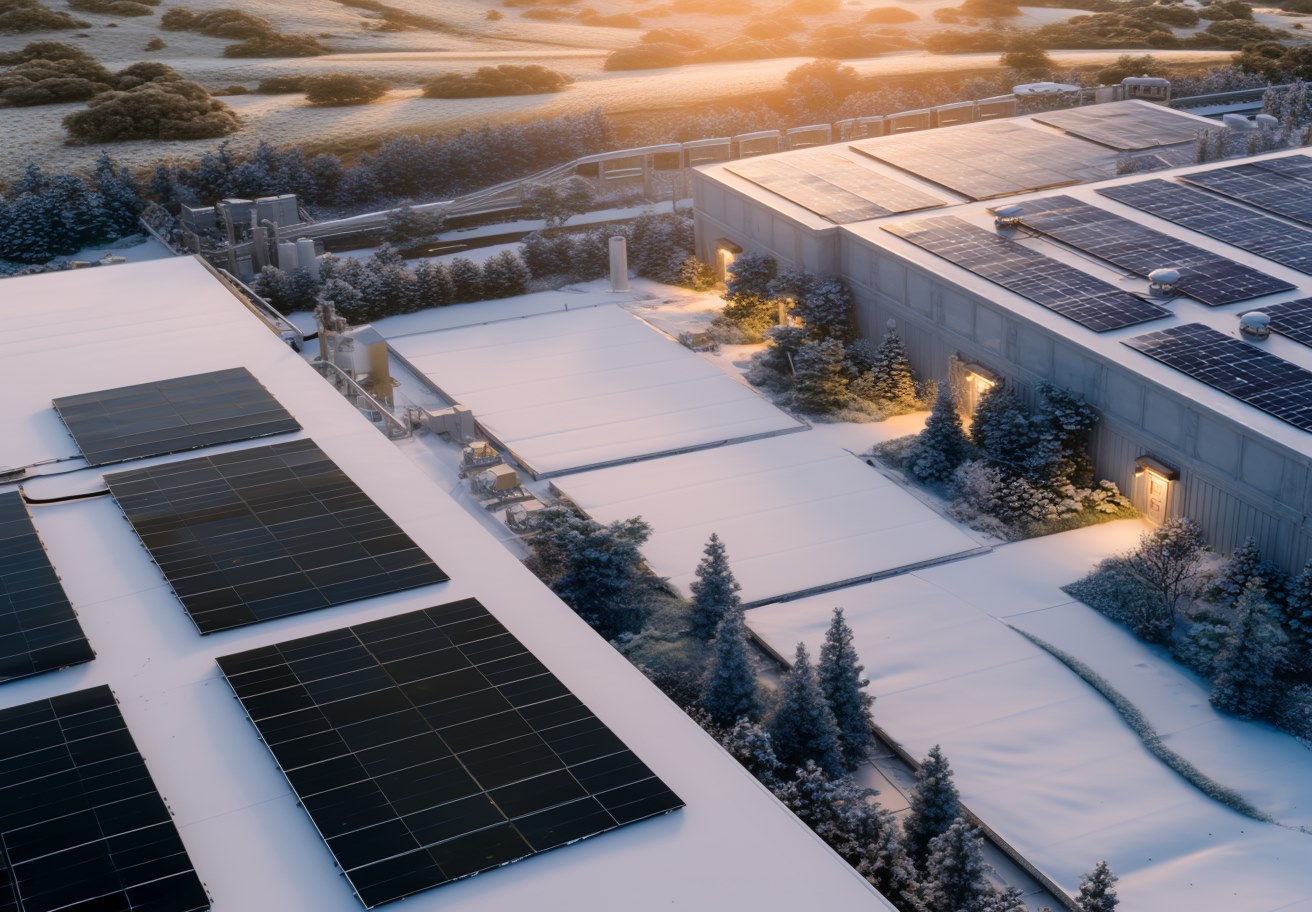
For a global giant like Toyota, achieving carbon neutrality isn't about a single, one-size-fits-all solution; it's a mosaic of strategies tailored to local conditions and delivering rapid results. With pressing emission reduction targets, Toyota understands the paramount importance of efficiency. Where can companies find proven solutions that simultaneously drive operational emission reductions? The answer is often right above them: on the rooftops of their factories and facilities. Below, we explore selected solar initiatives by the company.
500 kW Solar Installation Powers Toyota's Mexico Production
At Toyota's Apaseo el Grande plant in Guanajuato – which began producing the Tacoma pickup truck in late 2019 – an advanced rooftop photovoltaic system featuring approximately 499.22 kW (nearly 0.5 MW) of LONGi panels was installed. The system delivers clean electricity to support the factory's operations, generating an estimated 800 MWh of renewable energy annually and reducing carbon emissions by approximately 410 tons per year, showcasing Toyota's dedication to sustainable industrial practices across its manufacturing network. It not only supplies clean energy to the production line but also embodies Toyota's management philosophy of "genchi genbutsu" – immersing oneself on-site to identify optimal, locally adapted solutions.

Green Energy in the Supply Chain: Toyota Boshoku Leads with Rooftop PV
Toyota's green revolution extends throughout its supply chain. In Vietnam, Toyota Boshoku, a key interior supplier, has significantly reduced its carbon footprint with a 1.47 MWp rooftop photovoltaic project. Installed by LONGi and Solar Electric Vietnam (SEV), the system is set to generate over 1,582 MWh of clean electricity annually, aiding in the company's CO₂ emission reduction by approximately 1,338 tons per year, aligning with the 2% annual CO₂ reduction target. This project exemplifies Toyota's philosophy: true environmental protection must encompass the entire product lifecycle.

In Europe, Toyota's solar footprint spans multiple production sites and operations, directly supporting the region's decarbonization goals.
Deeside PV Project Saves 1,800 Tonnes of CO₂ Annually
At the Deeside Engine Plant in North Wales, Toyota initiated a transformative photovoltaic project in 2014 – encompassing around 12,680 panels over nearly eight football pitches (Source: Toyota UK Magazine). This installation generates 3.48 million kWh of electricity annually, supplying up to 10% of the plant's electricity needs and powering the production of approximately 22,500 engines each year (Source: Toyota UK Media). It also reduces CO₂ emissions by 1,800 tonnes per year – equivalent to the weight of roughly 1,260 Auris hatchbacks (Source: Toyota UK Media). Installed in just three months, the project highlights Toyota's Sustainable Plant initiative: integrating renewable energy to lessen environmental impact while enhancing operational efficiency (Source: Toyota UK).
Solar Air Heating and Rooftop PV Enhance Sustainability at Toyota's Onnaing Plant
At Toyota's Onnaing plant in Northern France, the company has implemented an innovative SolarWall® system: solar air heating mounted on the building's south-facing façade. This technology captures solar thermal energy to pre-heat the plant's ventilation air, yielding year-round benefits: energy savings of up to 25% annually and a reduction of approximately twenty tonnes of CO₂ emissions per year compared to conventional heating methods. The SolarWall® system complements other green measures already in place, such as a photovoltaic membrane on the logistics building's roof, water recycling, biodiversity projects, and environmental education programs. This makes Onnaing one of Toyota's flagship Sustainable Plants, where efficiency, renewable energy, and community engagement converge. (Source: solarwall.com)
TMHE's Cross-Border Rooftop PV with Energy Storage Program
At the heart of its sustainability efforts, Toyota Material Handling Europe (TMHE) launched an ambitious solar program in partnership with Eneo Solutions, planning rooftop PV installations across multiple European production and administrative sites—starting with its Mjölby, Sweden headquarters—as part of one of the first cross-border PPA programs in rooftop PV (Source: Lectura Press). The initiative gives a "third life" to modular lithium-ion batteries, repurposing them as stationary energy storage for solar power—ensuring operations like charging electric forklifts continue uninterrupted, even when sunlight isn't available. Aiming to further extend this reach, TMHE's French division, Toyota Material Handling France, partnered with solar developer Alight to deploy a 300 kWp rooftop system at its Bussy-Saint-Georges facility. This installation—comprising 790 solar panels—generates approximately 323 MWh annually, accounting for 25% of the site's yearly energy consumption (Source: pv magazine France).
Toyota: 100% Renewable Energy Across Europe
Since 2019, Toyota Motor Europe has powered all its operations (offices, logistics hubs, factories) with 100% renewable energy, achieved through a mix of on-site generation and renewable energy purchases. This has eliminated Toyota's Scope 2 emissions in Europe, aligning with its carbon neutrality roadmap.
Why Solar Should Underpin Corporate Sustainability Plans
Solar energy plays a direct role in the Third Challenge of Toyota's "Environmental Challenge 2050": the CO₂-Neutral Factory. It sets the goal of achieving carbon neutrality in manufacturing. There's a clear reason why Toyota has made solar energy a cornerstone of its strategy. And indeed, it makes sense for all businesses in Europe and beyond.
- Rapid Deployment: Utilizing existing building space, a system can be quickly installed and begin yielding emission reduction benefits in a short timeframe.
- Direct Emission Reduction: On-site energy generation significantly reduces reliance on grid fossil fuels, directly cutting Scope 2 emissions.
- Enhanced Efficiency and Resilience: Lowers energy costs and, to an extent, increases energy supply stability.
- Low-Load Roofs Can Be Included: Previously excluded from projects due to load-bearing constraints, lightweight module structures now allow for easy integration, enabling renewable energy benefits for factories, warehouses, and older buildings.
Strong Alliances: Selecting High-Value Partners to Enable Transformation
Toyota is leading an energy transformation worldwide, and its partner selection criteria are exceptionally stringent. Suppliers must not only deliver high-quality products but also provide technical solutions that align perfectly with Toyota's unwavering commitment to performance, reliability, and sustainability. In its Mexico and Vietnam projects, Toyota partnered with LONGi. LONGi's efficient and reliable products, coupled with their technological expertise, have helped Toyota maximize clean energy generation within limited rooftop space, ensuring long-term project stability and the achievement of emission reduction targets. These efforts are crucial in supporting Toyota's ambitious environmental vision.
"We Aim to Create Not Just Better Cars, but a Better Society."
From the hybrid revolution sparked by the Prius to rooftop solar power plants at factories worldwide, Toyota is building a sustainable ecosystem that spans products, manufacturing, and energy. Chairman Akio Toyoda once stated, "We aim to create not just better cars, but a better society." This vision is becoming a reality through action. Toyota's choices send a clear message to businesses in Europe: on the path to carbon neutrality, rooftop PV is a fast, effective, and multifaceted strategic initiative validated by global industrial giants. Choosing partners like LONGi, who can deliver value-driven solutions, will help us navigate this green transformation more effectively and reliably, marching together towards a sustainable future.
LONGi C&I Modules: Turning Rooftops into Energy Assets

Lorem ipsum dolor sit amet, consectetur adipiscing elit. Suspendisse varius enim in eros elementum tristique. Duis cursus, mi quis viverra ornare, eros dolor interdum nulla, ut commodo diam libero vitae erat. Aenean faucibus nibh et justo cursus id rutrum lorem imperdiet. Nunc ut sem vitae risus tristique posuere.

.jpg)