Two Nature publications reveal that LONGi is rewriting the rules of solar efficiency and flexibility
Date
January 15, 2026
read time
4
Minutes
Subscribe to the LONGi Newsletter

Scientific breakthroughs in back contact and tandem technologies provide the blueprint for the next generation of high-performance modules
The global solar leader LONGi has achieved a rare scientific milestone by publishing two separate research papers in the prestigious journal Nature. These peer-reviewed articles detail major breakthroughs in two key areas. The first publication explores silicon solar cells with hybrid back contacts, demonstrating how optimized rear connection designs can push efficiency limits. The second paper introduces a flexible perovskite/silicon tandem solar cell with a dual buffer layer, resolving long standing durability issues in lightweight photovoltaics. By securing these world records, LONGi demonstrates that its massive investment in research is directly translating into better performance for real world energy applications. For solar professionals, these papers validate the technical superiority of the latest cell architectures. For homeowners and business owners, they signal that solar panels are becoming significantly more powerful and adaptable.
Optimized back contact design drives silicon efficiency beyond 27 percent
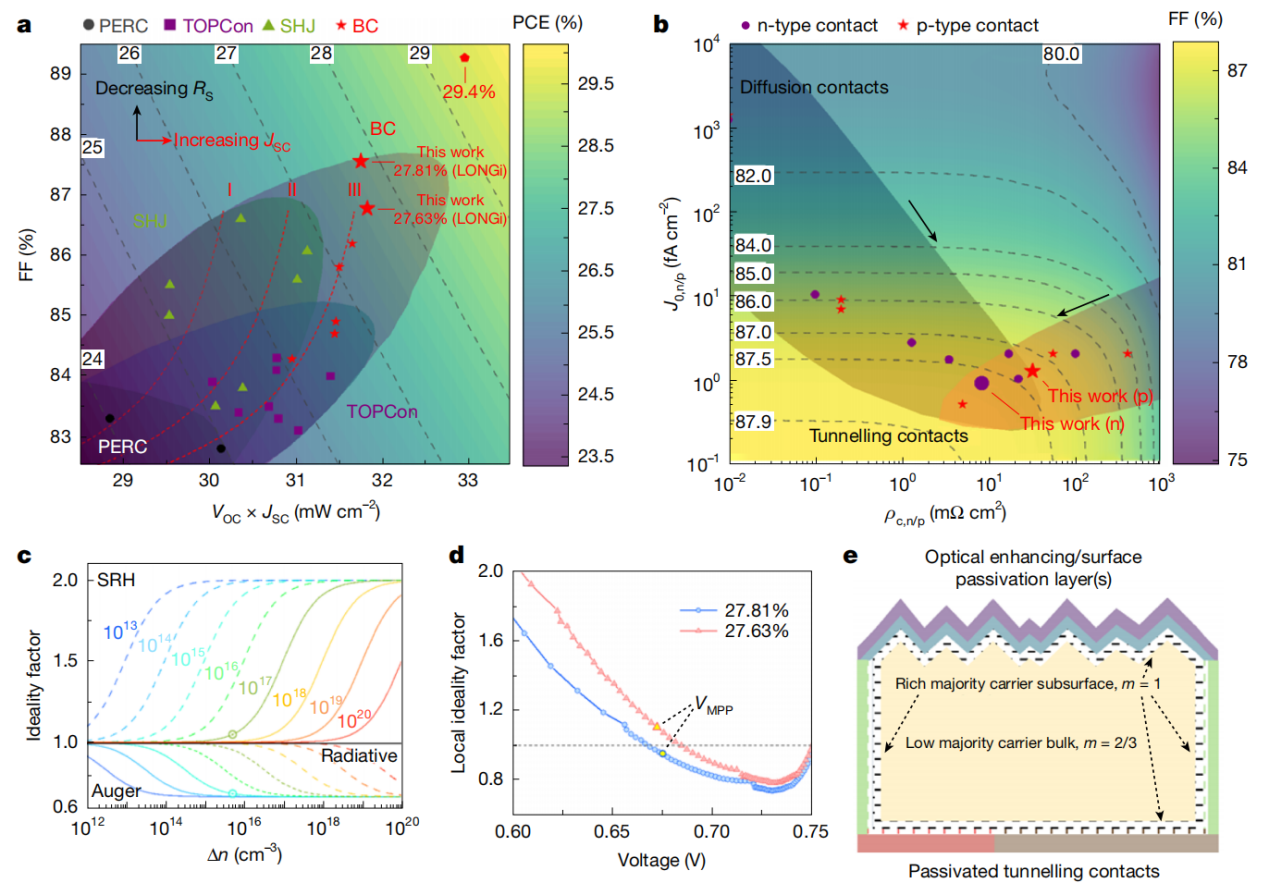
The first breakthrough focuses on what the industry calls HIBC, or Hybrid Interdigitated Back Contact silicon solar cells. In simple terms, LONGi has perfected a cell design where all the electrical wiring is moved to the back of the cell. This eliminates the metal grid lines usually seen on the front of a solar panel. Consequently, the cell can absorb 100 percent of the incoming sunlight without any shading. Working with Sun Yat-sen University and Soochow University, the research team achieved a certified efficiency of 27.09 percent using standard industrial grade TaiRay silicon wafers. This is the first time a full-size silicon cell has crossed the 27 percent threshold in a top tier scientific study.
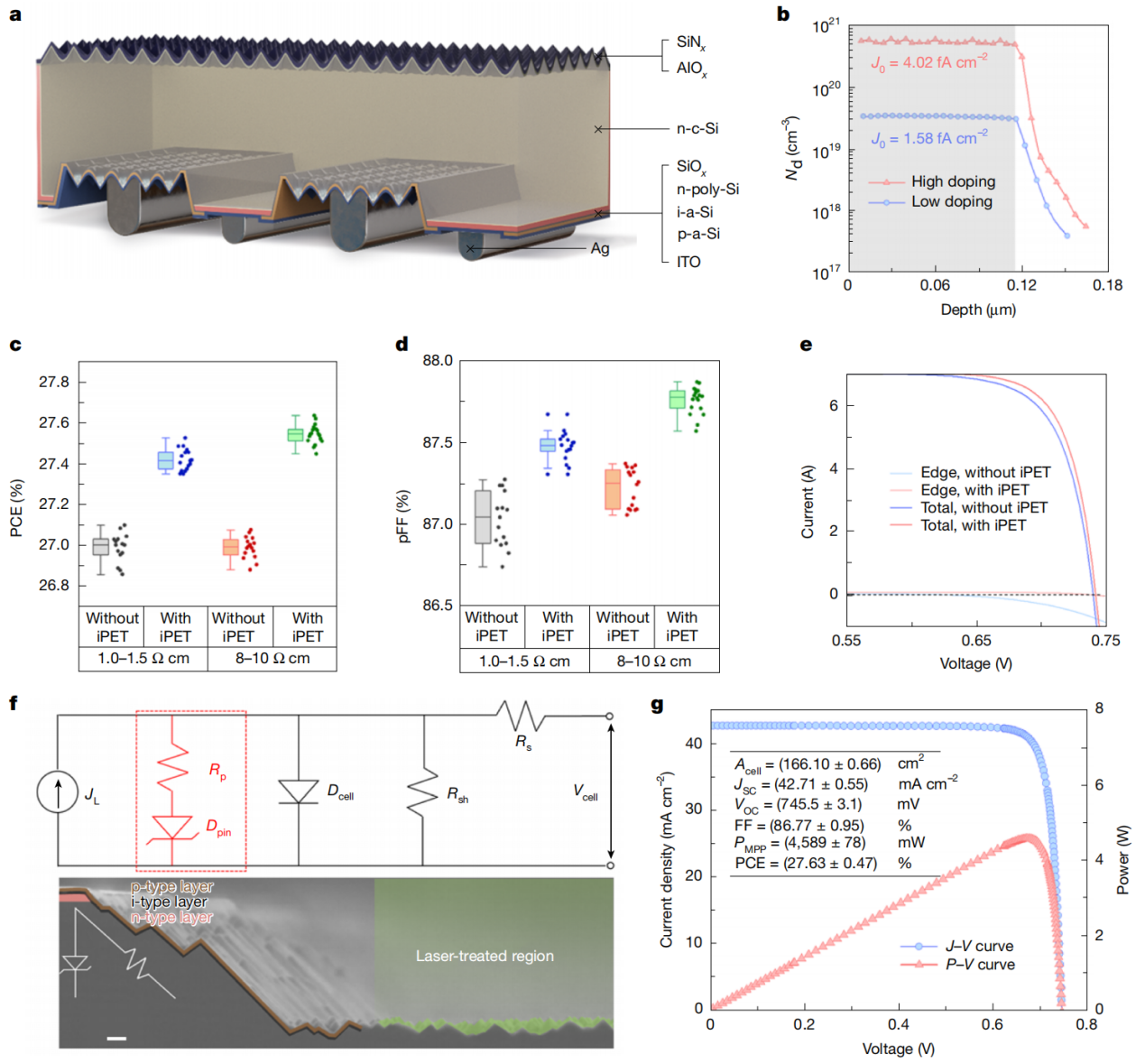
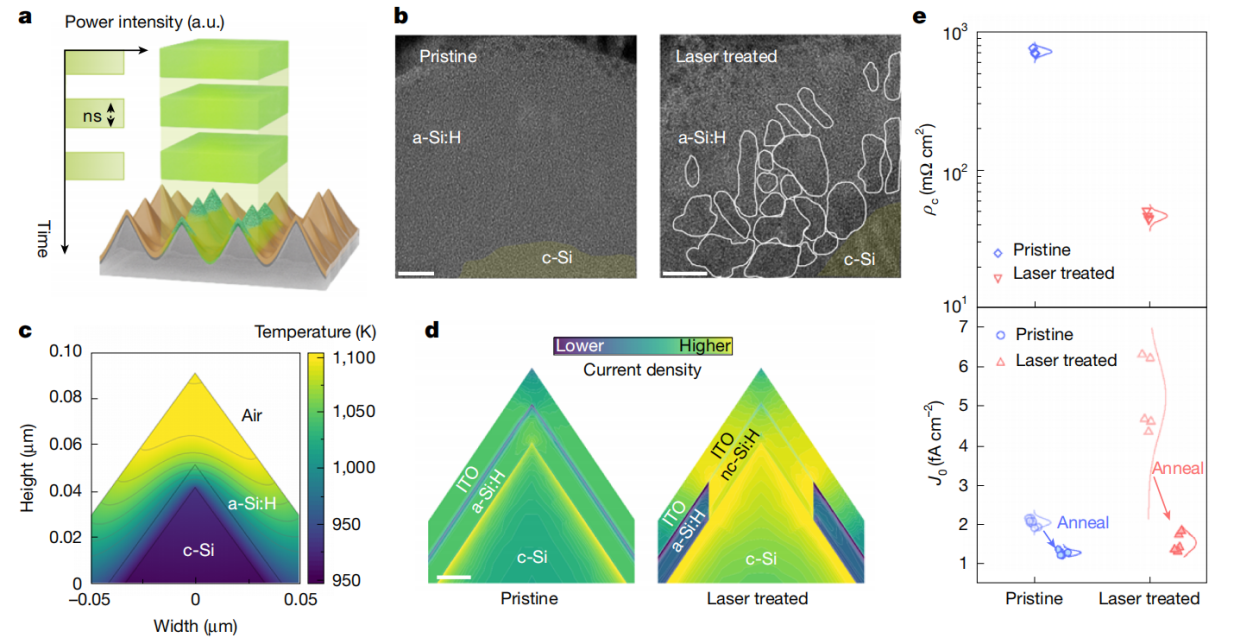
To make this possible, the engineers had to solve a critical manufacturing challenge regarding the delicate material layers. They used advanced laser techniques to improve the electrical flow without damaging the sensitive passivation layers. Specifically, the laser treatment effects on the i-a-Si/p-a-Si stack were optimized to prevent thermal damage, ensuring that the interface remains pristine for electron movement. By applying these precise treatments, the team managed to stop energy from escaping at the borders of the cell.
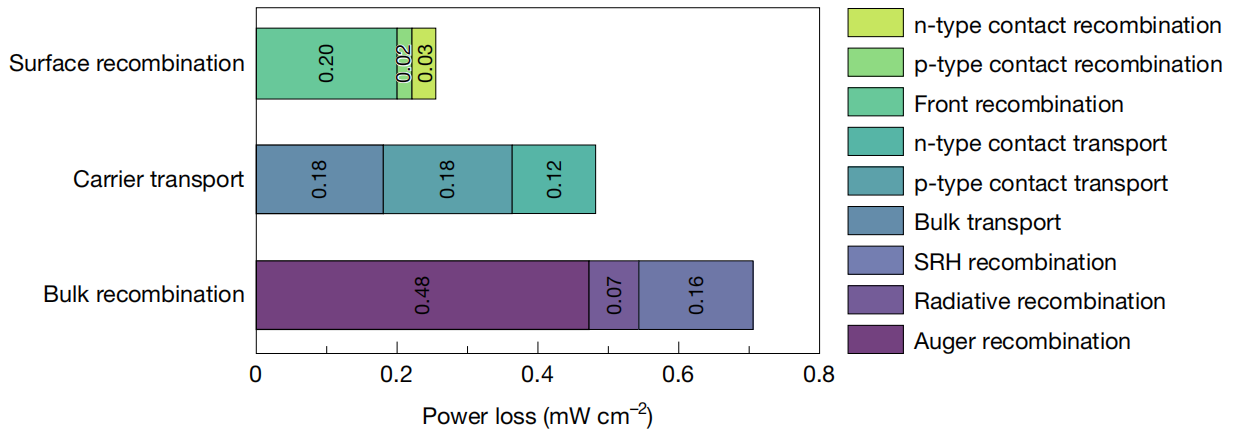
The success of this approach is quantified by a detailed breakdown of where energy is usually lost. The analysis confirms that optical losses are near zero due to the back contact structure, while electrical recombination losses are drastically reduced by the laser patterning. For installers, this confirms that BC technology is not just an aesthetic choice but a superior method for energy generation. This research directly supports the performance of current flagship products like the Hi-MO X10 and paves the way for even higher power density in future modules.
New flexible tandem cells offer high power output without compromising durability
The second publication tackles a futuristic challenge: how to make solar cells that are both incredibly efficient and flexible enough to wrap around curved surfaces. This involves tandem technology, which layers two different materials, silicon and perovskite, to capture different parts of the light spectrum. While standard silicon cells are rigid, LONGi has developed a version using ultra-thin silicon wafers with a thickness between 50 and 130 micrometers that can bend. The team achieved a world record efficiency of 33.89 percent on these flexible cells.

However, the real breakthrough is durability. Flexible cells often crack or lose performance when bent. To solve this, LONGi created a unique double buffer layer that acts like a microscopic cushion or spring. A key component of this solution is the SnOx buffer layer, which provides essential chemical stability and efficient charge transport between the layers. The properties of SnOx allow it to absorb the mechanical stress when the cell is bent without degrading the electrical connection.

In rigorous testing, these cells maintained 95 percent of their initial efficiency even after being folded 1,000 times at a radius of 1.5 cm. Furthermore, the long-term stability results confirm that these materials can withstand environmental aging, a crucial factor for real world adoption. For the solar industry, this opens up entirely new markets. These lightweight, durable cells are perfect for weight sensitive applications like drones, electric vehicles, and weak roof structures where heavy glass panels are not feasible.

Consistent R&D investment and theoretical analysis transform scientific records into reliable market solutions
These back-to-back Nature publications are more than just academic achievements. They reinforce the position of LONGi at the forefront of the global energy transition. Since 2012, the company has invested over 40 billion RMB in research and development. This commitment allows the company to move beyond simple experimentation into deep theoretical analysis. By understanding the fundamental physics of high efficiency cells, the research team can predict and overcome performance losses before they even reach the production line. This strategy of lab to fab ensures that scientific wins quickly become commercial realities. The rapid adoption of TOPCon and HPBC 2.0 technology in the market is proof of this cycle. The insights gained from these latest HIBC and tandem cell records will accelerate the development of the next generation of solar products. As demand for clean energy grows, LONGi remains committed to delivering solutions that are not only scientifically advanced but also reliable and accessible for every customer.
These scientific milestones lay the groundwork for a renewable energy future defined by high performance and reliability
The publication of these findings in Nature is a testament to the depth of innovation occurring within the labs of LONGi. By pushing silicon to its absolute limit with HIBC and solving the durability puzzle of flexible tandem cells, the company is doing more than setting records. It is creating the necessary tools for a carbon neutral world. As these technologies mature from the lab to production lines, customers can expect solar solutions that are more efficient, more durable, and adaptable to applications previously thought impossible.

Lorem ipsum dolor sit amet, consectetur adipiscing elit. Suspendisse varius enim in eros elementum tristique. Duis cursus, mi quis viverra ornare, eros dolor interdum nulla, ut commodo diam libero vitae erat. Aenean faucibus nibh et justo cursus id rutrum lorem imperdiet. Nunc ut sem vitae risus tristique posuere.