

Do solar panels work on cloudy days or in winter?
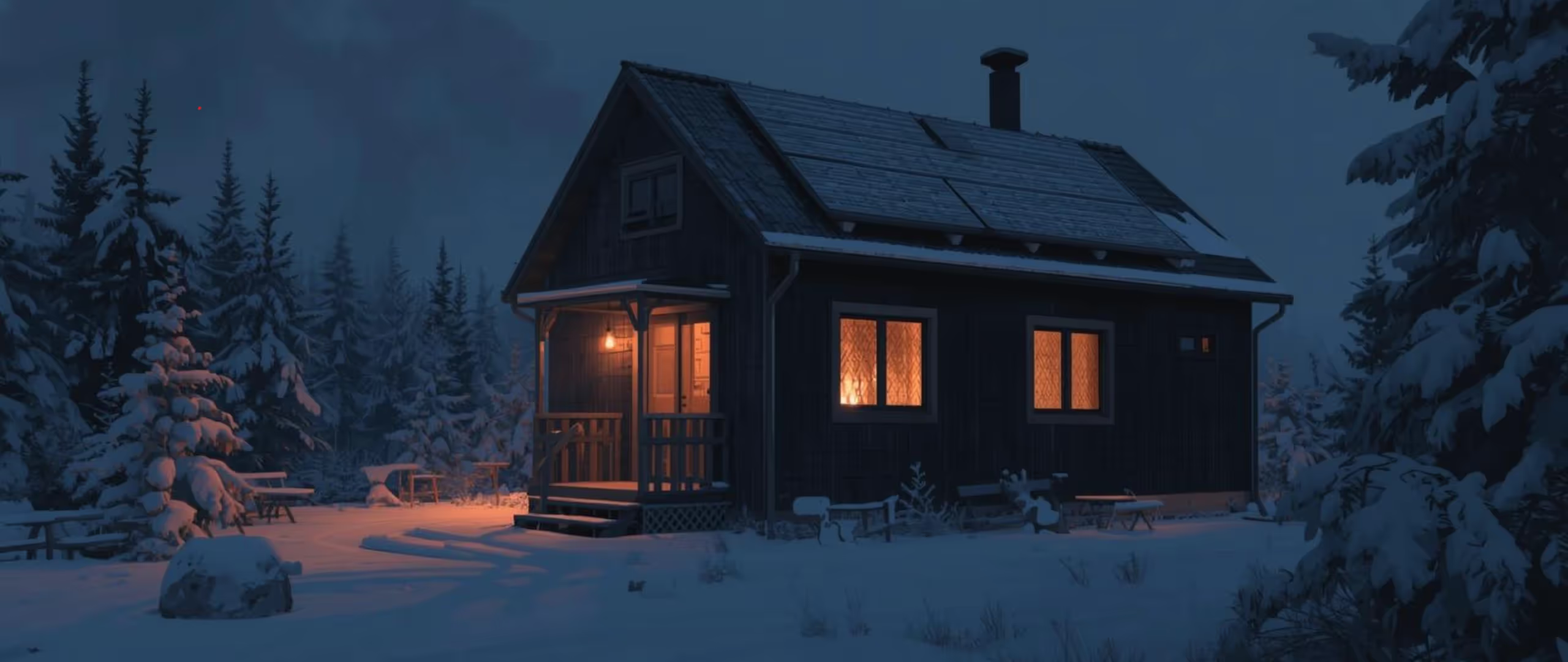
If you live in a region where grey skies are common from November to February, you have likely asked yourself a very practical question before buying a solar system: "Does this actually work when the sun isn't shining?" The answer is yes, if you choose the right module. Some solar panels can generate energy even in winter and low light. They use a specific solar technology called back contact technology, or BC. While conventional technologies struggle to wake up on gloomy days, back contact is specifically designed to turn "useless" grey light into free electricity for your home.
Here is how it works, and why the type of panel you choose makes all the difference for your winter energy bill.
The problem with "standard" solar panels in low light
To understand why some modules work better than others, we have to look at how light behaves.
- Direct Light: This is the bright sunshine you feel on a clear summer day.
- Diffuse Light: This is the scattered, soft light you see on a cloudy day. Standard solar panels capture direct sunlight very well, but they struggle with diffused or cloudy light. It is similar to using a bucket in the rain. If the rain falls straight down, the bucket fills quickly. But if the rain comes from the side or as a fine mist, much less water makes it inside.
On a heavy overcast day, a standard solar panel may therefore produce very little power, sometimes drifting into "sleep mode" because the light intensity isn't strong enough to activate the solar cells.
Choosing back contact modules is the best for low-light conditions
This is where back contact (BC) technology changes the game.
If you look at a conventional solar panel, you will notice thin silver lines running across the front of the blue or black cells. These are metal grid lines, the wiring used in older technologies. They are clearly visible even to someone without technical knowledge. They are not only less attractive visually; they also have a major downside: they block the sunlight. It is like trying to look out of a window that has metal bars across it. You are losing a percentage of the view (and the light) instantly.
BC technology moves all those metal lines to the back of the panel
By removing the metal grid from the front, two amazing things happen:
- 100% light absorption: The entire front surface becomes a "light sponge." There are no obstacles blocking the sun.
- Sensitivity to "glow": Because the surface is unshaded and chemically optimized, these panels are incredibly sensitive. They don't need a direct "beam" of the sun. They can absorb the ambient "glow" of a cloudy day.
Why back contact technology matters for home-owners
For a homeowner, this technical difference translates into real-life benefits:
- Longer working hours: BC panels "wake up" earlier in the morning at the first hint of dawn and go to sleep later at dusk. They work harder for longer hours.
- Cloudy day performance: When a thick cloud passes over, standard panels might drop their output significantly. BC panels hold steady, squeezing energy out of the scattered light.
- A sleek look: Without the metal grid lines, the panels look like deep, pure black glass. They look stunning on a residential roof.
And if you worry about cold or icy temperatures because you still believe modules need heat to work, here is the truth; cold winter temperatures act as a performance booster. On a crisp, freezing day, the voltage of solar cells actually increases. On a sunny winter day, your system may operate at its peak efficiency, even better than during a heatwave in July.
LONGi EcoLife back contact modules perform best in low-light conditions
So, how do you ensure you are getting this low-light-capable technology for your home? You don't need to memorize engineering manuals. You simply need to look for LONGi EcoLife. The LONGi EcoLife series is designed specifically for homeowners who want premium performance without dealing with unreliable or inconsistent solar output. EcoLife panels use advanced back contact technology to keep your roof generating power even when the weather is far from ideal.
By choosing EcoLife, you aren't just buying solar panels; you are choosing the reassurance that your home will keep producing green energy, even through the grey winter months.
More blog Articles
Discover our other articles


April 2, 2026

April 1, 2026
